
Jung Tsai
On June 26, 2000, inside the White House East Room, President Bill Clinton stood alongside rival pioneering scientists Dr. Francis Collins and Dr. Craig Venter. Joined across the Atlantic by British Prime Minister Tony Blair, they announced the completion of the first draft of the human genome. Clinton metaphorically declared, “Today, we are learning the language in which God created life.” It was a defining moment of truth, opening a new chapter in our understanding of biology. A few years later, the Human Genome Project revealed the final map of 3 billion nucleotides, and by 2023, scientists confirmed roughly 20,000 genes in our DNA. Interestingly, less than 3% of our DNA directly codes for life functions. While humans share 99.5% of their DNA with one another—and 98% with chimpanzees—the tiny differences that remain are enough to separate us. Decoding this blueprint has completely rewritten the human story.
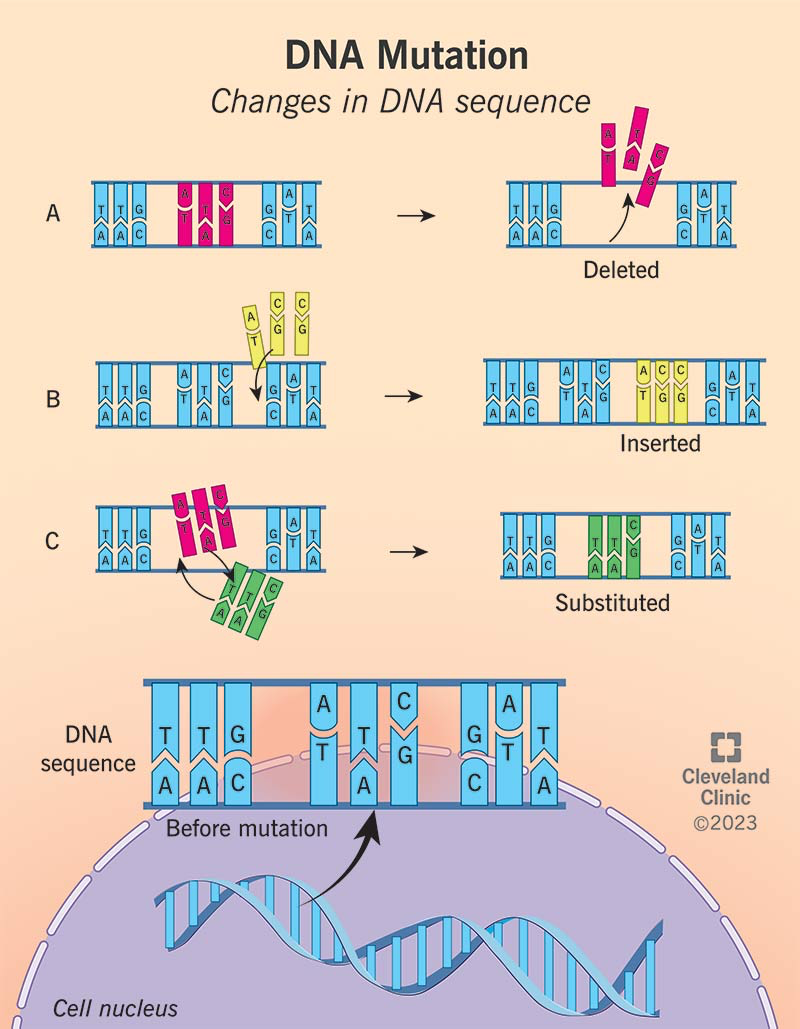
The story of life began long before. Some 13.8 billion years ago, the Big Bang gave rise to time, space, and the universe. As temperatures cooled, elemental minerals formed; hydrogen,helium appeared first, later followed by carbon, eventually expanding to the more than 100 elements we know today. Originally, these were all non-living atoms. Yet, deep undersea within ancient rocks, these molecular elements miraculously began to replicate. Living things had begun. Given favorable environments, single cells eventually aggregated to form complex, multicellular organs—a cornerstone of evolution driven by adaptation. However, perfect replication is impossible. When the molecular machinery that duplicates your genome makes a mistake, a mutation occurs. Instead of copying the original code word-for-word, the cell’s DNA polymerase might insert, delete, or substitute the wrong genetic letters (A, C, G, T) during cell division. Replicating trillions of times over a lifetime makes these errors inevitable. While about 5% of these mutations are inherited from our parents, the vast majority are acquired during our lifetime. This is the essence of mutation.
Constant genetic shifting starts at conception and continues until we die. This instability is a baseline of nature, and it is not always harmful. For instance, by age 70, half of all men lose the Y chromosome in a large percentage of their cells without obvious severe effects—though it may play a role in why men have shorter lifespans than women.
Furthermore, several mutations offer profound benefits:
- Sickle Cell Trait: While inheriting two copies of the sickle cell gene causes severe illness, carrying just one copy (heterozygous) protects against malaria.
- HIV Resistance: A specific deletion in the CCR5 gene (CCR5-delta 32) prevents HIV from entering cells, granting resistance to the infection.
- Cardiovascular Protection: Loss-of-function variants in the PCSK9 gene drastically lower LDL cholesterol, providing lifelong protection against heart disease.
- Metabolic Adaptation: Lactase persistence—the ability to digest milk into adulthood—is a striking example of rapid human evolution.
- Longevity: Specific variants of the FOXO3 gene are consistently associated with exceptional lifespans.
Conversely, our environment constantly assaults our DNA. Ultraviolet light can shift cytosine to thymine, while tobacco smoke frequently replaces cytosine with adenine. Smokeless tobacco leaves its own distinct chemical fingerprints. Today, databases like SomaMutDB can catalog a single specific error—such as a G-to-A mutation at position 82,349,536 on chromosome 9. Pinpointing these precise changes would be impossible without the foundation laid by the Human Genome Project.
Now, researchers do not just look at these mutations; they are learning to alter them. We see this in mRNA vaccines, immunotherapy, cancer treatments, and the cellular repair machinery aimed at extending health span. Yet, this brings us to a profound ethical question: Can we truly just subtract the bad mutations and keep the good? Deciding which pieces of our code to erase is a delicate power. Mutation is the engine of evolution; if we aggressively erase the wrong variants, we risk losing the sight of long-term consequences.
Some germline mutations—those passed through sperm and egg—have deep roots. Cystic fibrosis mutated into existence roughly 52,000 years ago during the Stone Age; sickle cell disease traces back 19,000 years, and Tay-Sachs disease about 1,000 years. Interestingly, data shows that the majority of new spontaneous mutations come from the father’s sperm rather than the mother’s egg. As men age, the probability of passing on these replication errors increases significantly. This accumulation of lifelong somatic mutations is precisely why our risk for diseases like cancer climbs as we grow older.
In the next chapter, I will explain why most mutations are double-edged swords, and what we can practically do to protect our genetic integrity.
<2026-06-15>